Warts are common skin growths caused by certain types of human papillomavirus (HPV). They can appear on the hands, fingers, feet, face, or other parts of the body and may sometimes disappear naturally as the immune system responds to the virus. Because warts can be persistent and sometimes frustrating, many people look for simple home remedies using ingredients already available at home.
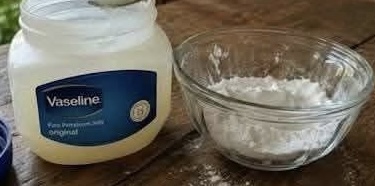
One popular online remedy combines petroleum jelly, such as Vaseline, with baking soda and claims that the mixture can make warts “fall off like leaves.” Although this sounds appealing, there is not good clinical evidence that a Vaseline and baking soda mixture can reliably remove warts.
What Are Warts?
Warts are noncancerous skin growths caused by HPV. The virus can enter the skin through tiny cuts or damaged areas and cause the outer layer of skin to grow more rapidly.
Different types of warts have different appearances. Common warts are often rough and raised, while plantar warts develop on the soles of the feet and can sometimes grow inward because of pressure from walking. Flat warts are generally smaller and smoother and may appear in groups.
Because several other skin conditions can resemble warts, it is important to be certain about the diagnosis before attempting home treatment.
What Does Vaseline Do?
Vaseline is a petroleum-based product commonly used to protect and moisturize the skin. It creates an occlusive layer that helps reduce moisture loss and can protect irritated skin from friction.
However, petroleum jelly is not a proven wart-removing medication. Applying Vaseline alone is therefore unlikely to make a wart disappear.
It can sometimes be useful around an area being treated with another product because it may help protect surrounding healthy skin, but it should not be considered a treatment that eliminates the HPV infection.
What About Baking Soda?
Baking soda, or sodium bicarbonate, is a common household ingredient sometimes recommended online for various skin problems. Some homemade recipes suggest mixing it with petroleum jelly to create a paste and applying it directly to a wart.
There is insufficient clinical evidence showing that this combination safely and effectively removes warts. Baking soda can also irritate the skin, especially when repeatedly applied or covered for long periods.
Skin irritation can lead to redness, burning, dryness, or even damage to the surrounding skin. A stronger-looking reaction does not necessarily mean that the wart is being successfully treated.
Why Online Wart Remedies Can Be Misleading
Social media images often show dramatic before-and-after results, but these pictures do not establish that a particular home remedy caused the improvement. Warts can naturally change or disappear over time, and photographs may also be taken under different lighting or conditions.
A claim that a remedy makes warts “fall off” should therefore be treated cautiously, particularly when there is no reliable clinical evidence behind it.
Evidence-Based Wart Treatments
Several treatments are commonly used for warts. One of the most widely available options is salicylic acid, which gradually breaks down the thickened skin of the wart. Treatment usually requires consistent application over time rather than a single application.
Healthcare professionals may also use treatments such as cryotherapy, in which the wart is frozen. Depending on the location, size, number, and type of wart, other medical treatments may be considered.
The appropriate approach can vary from person to person, so persistent or troublesome warts may benefit from evaluation by a dermatologist or other qualified healthcare professional.
When You Should Get Medical Advice
Not every unusual skin growth is a wart. You should seek professional advice if a growth changes rapidly, bleeds without an obvious reason, becomes painful, looks unusual, repeatedly returns, or does not respond to appropriate treatment.
Extra caution is also appropriate for people with diabetes, poor circulation, reduced sensation in the feet, or weakened immune systems. In these situations, attempting to remove a skin growth at home can potentially cause complications.
Warts located on the face or around the genitals should also be assessed by a healthcare professional rather than treated with household mixtures.
How to Care for Wart-Prone Skin
Good hygiene can help reduce the spread of HPV. Avoid picking, cutting, or scratching warts because this can potentially spread the virus to nearby skin. Do not share nail clippers, files, towels, or other personal items that come into contact with affected skin.
Keeping the skin clean and avoiding unnecessary trauma can also help protect the skin barrier.
Final Thoughts
The combination of Vaseline and baking soda is frequently presented online as a simple home remedy for removing warts, but there is not enough scientific evidence to conclude that it reliably eliminates warts. Vaseline is primarily a skin-protective moisturizer, while baking soda is not an established wart treatment.
If you have a confirmed wart and want to treat it at home, an evidence-based product such as salicylic acid may be more appropriate than an unproven homemade mixture. Persistent, painful, unusual, or uncertain skin growths should be examined by a healthcare professional.
Most importantly, avoid aggressive attempts to burn, cut, scrape, or chemically damage a wart at home. A treatment that irritates or injures healthy skin can create a bigger problem than the original wart.